Frida Baranek

Brasil

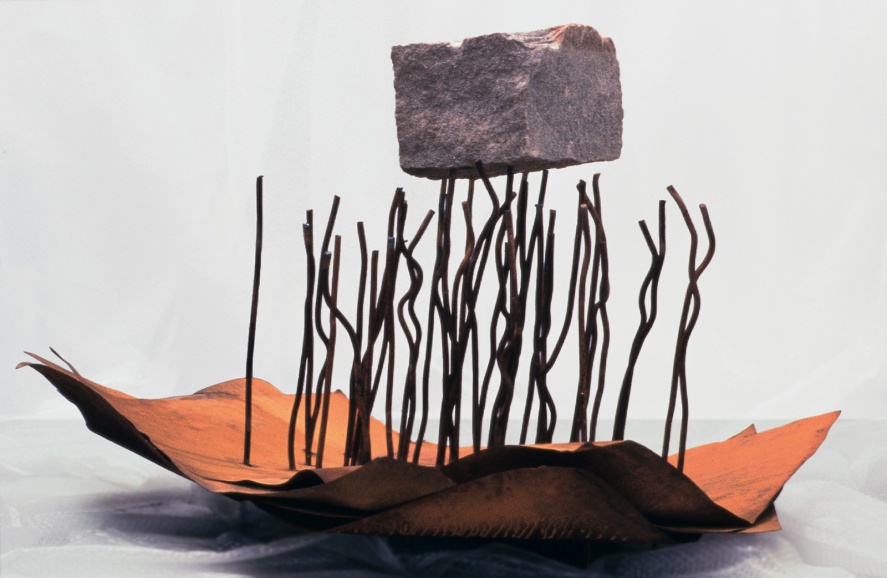
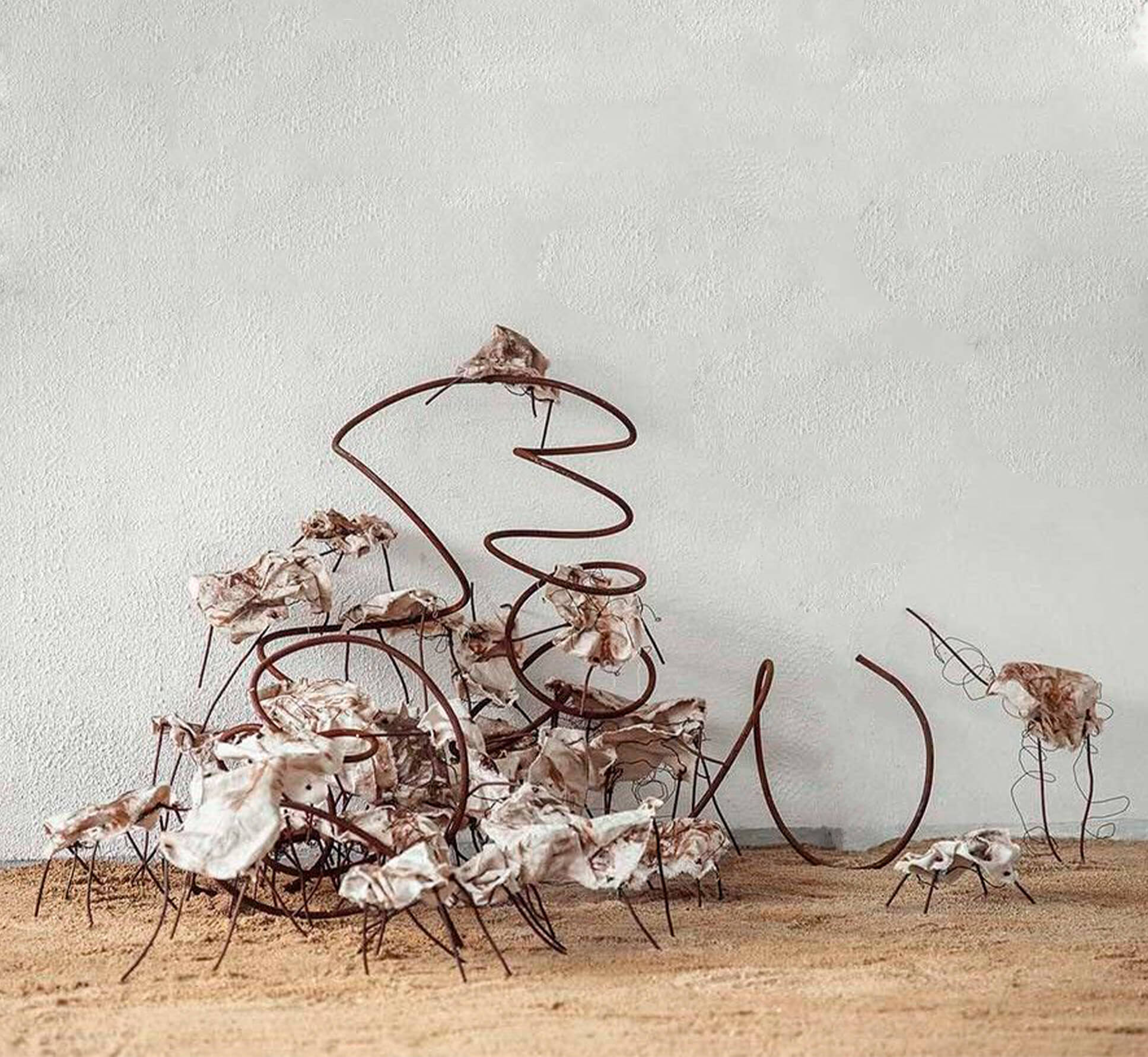
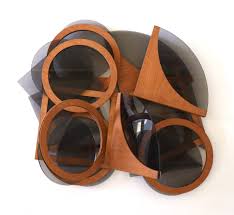
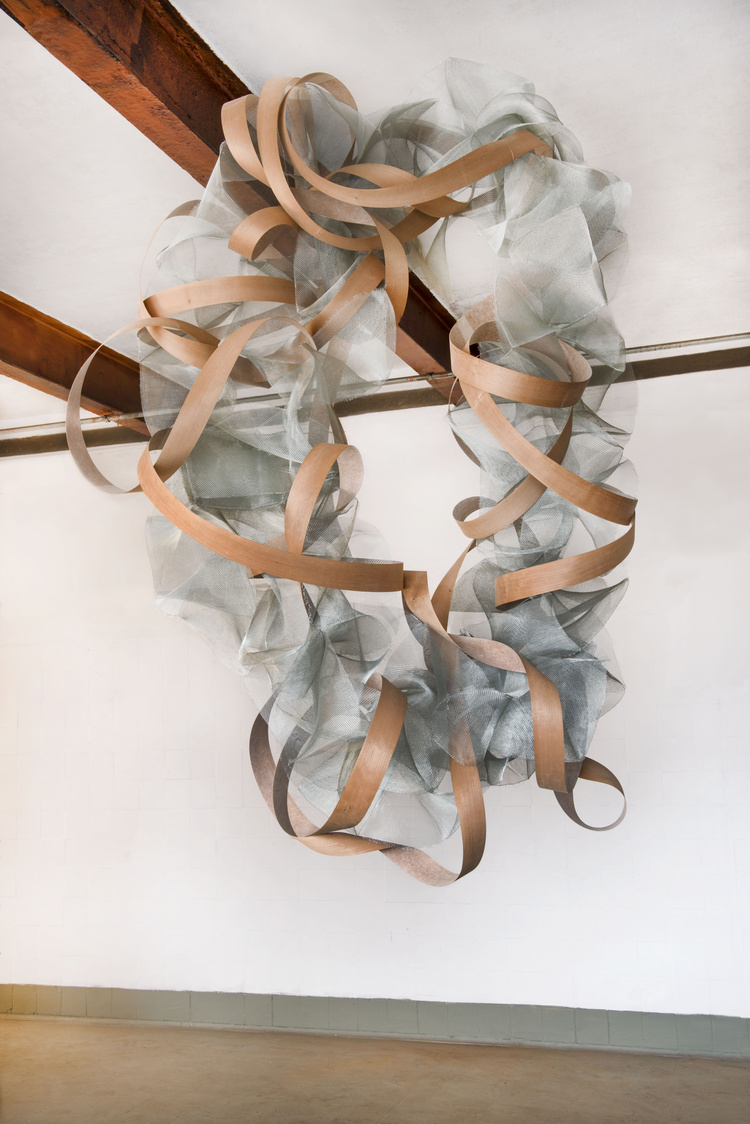
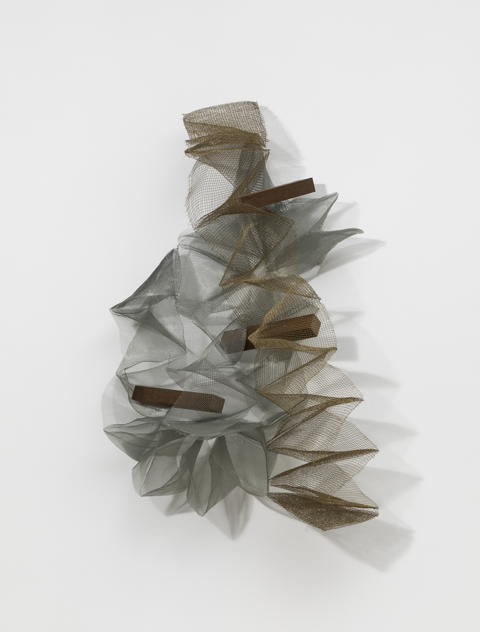
Frida Baranek works predominantly with sculpture, but also with drawing and printmaking, techniques with which her sculptural production establishes a certain formal relationship. She frequently uses industrialized materials, such as iron and steel filaments, plates and rebar, often oxidized, in contrast with natural elements, such as stone and wood, making visible the contradiction between the impersonality of the material and the delicacy of her sculptures. In her formal vocabulary, recognizable are the structures that refer to whirlpools, tangles and even wreckage, such as the thin wires of tangled and seemingly fragile metal, but which in the cumulative process create rigid volumes where the lighter material seems to support the heavier, revealing the artist’s interest in issues related to balance and imbalance. Baranek’s sculptures can assume different configurations in each space where they are reassembled, taking on a morphological indeterminacy that invites participation.

Frida Baranek studied sculpture with João Carlos Goldberg and Tunga at the School of Visual Arts of Parque Lage and at the Museum of Modern Art in Rio de Janeiro. She graduated in architecture from Santa Úrsula University in Rio de Janeiro in 1984. She pursued postgraduate studies in sculpture at Parsons School of Design in New York and a master’s degree in Industrial Design at Central Saint Martins in London. She moved to Paris in the 1990s, then to Berlin, and in 2002 to New York.

In 2013, the Museum of Modern Art in Rio de Janeiro presented the exhibition “Confrontations,” a retrospective of Baranek’s work. She participated in exhibitions at the São Paulo Biennial (1989); Venice Biennale (1990); Museum of Modern Art of São Paulo (1995, 1988); Ludwig Museum (Germany, 2005), among many others. It is part of public and private collections, such as the Patricia Phelps de Cisneros collection (USA); National Museum of Women in the Arts (USA); LEF Foundation (USA); BusanPusan ​​Metropolitan Art Museum (South Korea); Museums of Modern Art of Rio de Janeiro and São Paulo; Rio Art Museum, among others.

Museums and Public Collections

  • Museum of Fine Arts, Houston, Texas, EUA
  • Coleção Marcantonio Vilaça, Brasil
  • Fundación Cisneros – Colección Patricia Phelps de Cisneros, Nova Yorque,
  • EUA; Caracas, Venezuela
  • Instituto Figueiredo Ferraz, Ribeirão Preto, Brasil
  • Island Press, St. Louis, EUA
  • LEF Foundation, San Francisco, EUA
  • Loumeier Foundation, St. Louis, EUA
  • Ministère de la Culture – Fonds National d’Art Contemporain (FRAC), França
  • Museu de Arte Moderna de São Paulo, São Paulo, Brasil
  • Museu de Arte Moderna do Rio de Janeiro, Rio de Janeiro, Brasil
  • National Museum of Women in the Arts, Washington, EUA
  • Pinacoteca do Estado, São Paulo, Brasil
  • Busan Metropolitan Art Museum, Busan, Coreia do Sul
  • Washington University Art Museum, St. Louis, EUA
  • Kemper Art Museum, St. Louis, EUA
  • Blanton Art Museum, Austin, EUAatéria mais leve parece sustentar a mais pesada, revelando o interesse da artista por questões relacionadas ao equilíbrio e ao desequilíbrio. As esculturas de Baranek podem assumir configurações diferentes em cada espaço onde são remontadas, investindo-se de uma indeterminação morfológica que convida à participação.
  • Frida Baranek estudou escultura com João Carlos Goldberg e Tunga na Escola de Artes Visuais do Parque Lage e no Museu de Arte Moderna do Rio de Janeiro. Formou-se em arquitetura pela Universidade Santa Úrsula, no Rio de Janeiro, em 1984. Cursou pós-graduação em escultura pela Parsons School of Design, em Nova York, e mestrado em Design Industrial na Central Saint Martins, em Londres. Mudou-se para Paris na década de 1990, em seguida para Berlim e, em 2002, para Nova York.
Em 2013, o Museu de Arte Moderna do Rio de Janeiro apresentou a exposição “Confrontos”, uma retrospectiva do trabalho de Baranek. Participou de exposições na Bienal de São Paulo (1989); Bienal de Veneza (1990); Museu de Arte Moderna de São Paulo (1995,1988); Museu Ludwig (Alemanha, 2005), além de muitas outras. Faz parte de coleções públicas e privadas, como a coleção de Patrícia Phelps de Cisneros (EUA); National Museum of Women in the Arts (EUA); LEF Foundation (EUA); BusanPusan Metropolitan Art Museum (Coreia do Sul); Museus de Arte Moderna do Rio de Janeiro e de São Paulo; Museu de Arte do Rio, entre outras

Work

Click to enlarge